Access control has traditionally required more than readers, credentials, and electronic locks. Organizations also had to consider local servers, access control software, databases, updates, backups, and the IT infrastructure needed to keep everything running.
Access Control as a Service (ACaaS) changes that model by moving much of the software and management layer into the cloud. Instead of managing every component locally, authorized administrators can manage doors, users, credentials, permissions, and access activity through a cloud-based platform.
For organizations with multiple locations, frequent employee changes, or limited resources for maintaining physical critical infrastructure, cloud-based access control solutions can offer significant operational advantages.
ACaaS also belongs to a broader shift toward Security as a Service, alongside technologies such as Video Surveillance as a Service (VSaaS) that have become just as vital for commercial or enterprise security.
Understanding how ACaaS works and how it compares with on-premise and hybrid access control can help organizations decide whether cloud-based security solutions fit their facilities and long-term security strategy.
What Is Access Control as a Service?
Access Control as a Service is a cloud-based approach to managing physical access control.
Traditional physical access control systems (PACS) may depend on locally hosted software and server infrastructure. With ACaaS, much of the software, administration, and data-management environment is delivered through a subscription-based service hosted on cloud computing platforms.
Authorized users can typically manage functions such as credentials, door permissions, schedules, users, and access activity through a browser-based interface or application.
However, cloud-based access control does not eliminate physical door hardware, far from it.
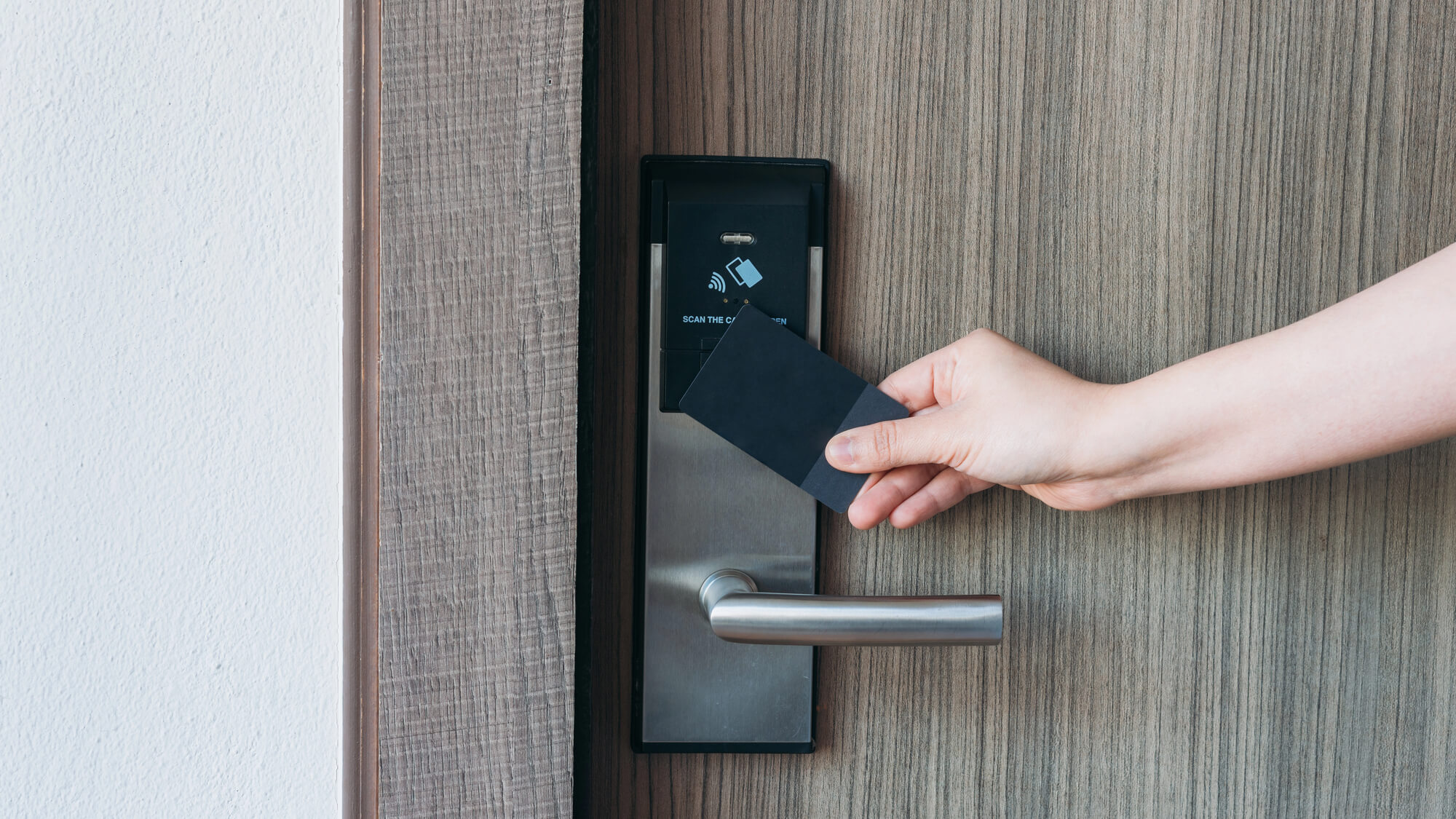
A typical deployment may still require electronic locks, credential readers, door controllers, request-to-exit devices, sensors, and other hardware at the property. The major difference is where the software and management infrastructure operate and how those resources are maintained.
In that respect, Access Control as A Service applies many of the principles behind Software as a Service (SaaS) and cloud computing to physical security systems.
How Does ACaaS Work?
An Access Control as A Service platform connects physical access control equipment at the property with a centrally managed software environment.
At a simplified level, an access event might follow this path:
Credential → Reader → Door Controller → Access Decision → Activity Record
- An employee might present a card, mobile credential, or another supported credential at a reader.
- The access control system determines whether that person has permission to enter the door at that time.
- The associated activity can then become available through the management platform.
From the administrative side, authorized personnel can use the platform to manage users, credentials, doors, schedules, access rules and permissions, and activity across one or many properties.
Importantly, cloud access control does not necessarily mean every door must communicate with a remote cloud server before it can unlock. Access-governance architecture varies, and local controllers can retain important functionality at the building.
That distinction becomes especially important when evaluating network availability and what happens during an Internet outage.
ACaaS vs. On-Premise Access Control
The fundamental difference between Access Control as a Service and traditional on-premise access control is where the primary software and management infrastructure reside within the security systems.
On-Premise Access Control
With an on-premise model, an organization typically maintains access control software, databases, and supporting server infrastructure within its own environment. This can provide organizations with significant direct control over critical infrastructure and may make sense where specific operational, architectural, or regulatory compliance requirements favor locally managed systems.
The tradeoff, however, is in responsibility. Depending on the platform, the organization may need to manage servers, backups, software updates, cybersecurity, system availability, and ongoing maintenance. Extending centralized administration across numerous facilities can also require additional infrastructure and IT planning to ensure data security and address any cybersecurity threats.
Cloud-Based Access Control
In contrast, ACaaS moves much of that management environment to cloud-based security solutions. Rather than maintaining the entire software stack at each property, authorized administrators can access the system remotely to manage users, doors, credentials, and permissions across various locations.
Potential advantages of cloud-based solutions to access control include easier remote administration, reduced dependence on local server infrastructure, centralized management, provider-delivered software updates, and a more straightforward path for adding locations.
This model can be particularly beneficial for organizations or government agencies involved in smart building technologies or smart city projects.
Cloud-based, however, does not automatically mean more secure or less secure than on-premise access control.
Security depends on a multitude of factors and other crucial components, including platform architecture, encryption, permissions, central monitoring, endpoint security, and the organization’s own cybersecurity practices. In line with these practices, compliance with standards such as ISO/IEC 27001:2022, GDPR, and NIST SP 800-53 Rev 5 can also play vital roles in safeguarding against cybersecurity threats and security breaches.
ACaaS vs. On-Premise vs. Hybrid Access Control
The choice is not always simply cloud or local. Some organizations use a hybrid cloud-physical architecture that combines cloud-based capabilities with locally maintained infrastructure.
| Consideration | ACaaS | On-Premise | Hybrid |
| Software hosting | Primarily cloud-based | Primarily local | Combination |
| Local server requirements | Generally reduced | Typically greater | Varies |
| Remote administration | Core capability | Depends on configuration | Often available |
| Multi-location management | Well-suited to centralized management | Infrastructure-dependent | Can support centralized operations |
| Software updates | Often service/provider managed | Typically organization managed | Responsibility varies |
| Cost structure | Subscription-oriented | Often greater upfront infrastructure investment | Mixed |
| Infrastructure control | Platform-dependent | Greater direct local control | Balanced |
| Expansion | Designed for scalable deployment | May require additional infrastructure | Depends on the architecture |
There is no universally superior model.
An organization with dozens of geographically distributed locations may value centralized cloud administration very differently from a critical facility with specific local-control requirements.
The decision should account for existing infrastructure, IT strategy, cybersecurity requirements, number of facilities, regulatory obligations, and even future growth.

How ACaaS Per-Door Pricing Works
One of the biggest commercial differences between Access Control as a Service and traditional access control is the subscription model.
ACaaS offerings, part of a broader cloud security solutions trend, are often priced according to factors such as the number of controlled doors, users, features, integrations, service tier, or support requirements. This allows businesses to align their access control environment costs with their actual usage and needs instead of a larger upfront investment typically associated with traditional systems.
Despite the cloud-based nature of ACaaS, hardware expenses are not eliminated. Essential components like readers, controllers, locks, sensors, network equipment, and potentially even IoT devices are still required, along with professional installation. These requirements assure a comprehensive and secure setup that integrates cloud computing platforms such as SaaS, IaaS, or PaaS to enhance data security and cybersecurity measures.
A subscription model in ACaaS doesn’t inherently mean less cost. A better analysis considers the total cost of ownership over several years, including:
- Access control hardware and installation
- Server or cloud infrastructure, whether on a public cloud or private cloud
- Software licensing or subscriptions
- IT administration efforts
- Updates and maintenance for continuous cybersecurity readiness
- Technical support for troubleshooting and assistance
- Expansion to additional doors and locations, crucial for scalable deployments in enterprises
For some organizations, the operational predictability and reduced infrastructure burden of a subscription model resonate profoundly, especially for those navigating digital transformation while ensuring regulatory compliance.
This approach is not only favored for enterprise security but also within critical infrastructure sectors where cybersecurity threats and security breaches are significant concerns.
Remote Provisioning and Deprovisioning
One of the strongest operational benefits of cloud-managed access control is the ability to administer credentials remotely.
Consider what happens when an employee joins a company with multiple facilities.
An administrator can potentially create the user, issue an appropriate credential, assign permitted doors and locations, establish schedules, and activate access without configuring separate systems at every property.
The same principle applies when an employee changes roles or locations.
More importantly, it applies when someone leaves.
An administrator may be able to revoke the former employee’s credentials centrally rather than depending on administrators at individual facilities to remove access separately.
This is particularly valuable for organizations with frequent personnel changes, contractors, temporary workers, geographically distributed facilities, or centralized security teams.
From a broader cybersecurity perspective, physical access should follow the same basic principle as digital access: when someone no longer requires access, their permissions should be removed promptly.
Mobile Credential Management With ACaaS
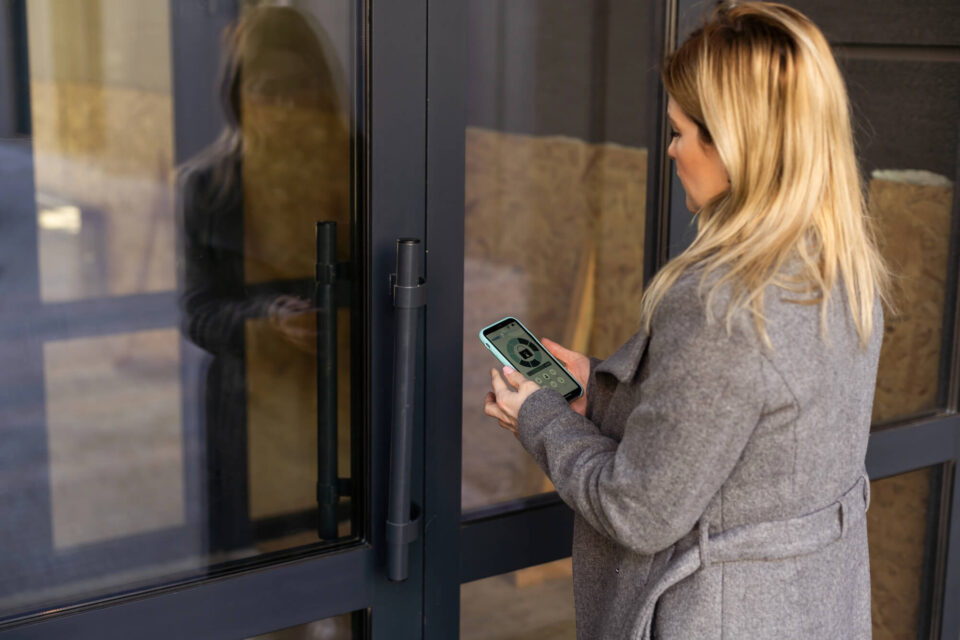
Cloud-based access control can also make smartphones and mobile applications part of the credential lifecycle.
With compatible readers and platforms, a mobile credential system can allow an authorized user’s smartphone to function as an access credential. Instead of relying exclusively on physical cards, organizations may be able to issue, manage, and revoke mobile credentials remotely.
This can simplify employee onboarding and reduce some of the administrative work associated with distributing and recovering physical cards.
Mobile credential management may provide added benefits such as faster credential issuance, remote revocation, fewer physical cards to manage, real-time monitoring, and more convenient contactless entry experiences.
That convenience still requires appropriate security.
Organizations should evaluate how credentials are protected, what happens when a device is lost or replaced, and how administrators authenticate when accessing the ACaaS platform. Multi-Factor Authentication (MFA), for example, can provide additional protection for administrative accounts where supported.
Biometric systems and facial recognition may also form part of certain access control ecosystems, but availability and appropriate use depend on the platform, application, policies, and applicable privacy requirements.
Why ACaaS Makes Sense for Multi-Location Businesses
Access Control as a Service offers significant benefits for organizations operating across multiple locations. Here are the main reasons why it is an ideal solution:
- Centralized Management: Without a unified system, companies often face disjointed access control processes, with each location managing its own credentials and security measures. ACaaS provides a centralized platform, allowing a security or facilities team to oversee all locations, including headquarters, branch offices, and warehouses, from one administrative console.
- Consistency in Access Policies: ACaaS facilitates the establishment of uniform access policies across all facilities, ensuring that the same standards are met regardless of location. This uniformity simplifies the complex task of policy management, making it easier to enforce security measures consistently.
- Streamlined Credential Issuance: With cloud-based access control software, issuing credentials to employees needing access to multiple sites is streamlined. A central administrator can grant access to all necessary locations from one platform, eliminating the need for each site to manage credentials independently.
- Efficient Permission Revocation: In the event an employee’s access needs to be revoked, ACaaS enables swift action across all locations. This rapid response reduces security risks and ensures that only authorized personnel have access.
- Scalable for Growth: As businesses undergo digital transformation or expand geographically, Access Control as a Service adapts to their growing needs. Adding new locations to the security network can be accomplished efficiently, allowing the business to scale without overhauling its security infrastructure.
- Comprehensive Activity Review: ACaaS provides a holistic view of access activities across all sites, aiding in the monitoring and auditing of security protocols. This comprehensive insight supports better decision-making and incident response.
For enterprises managing a distributed physical presence, resources like Prime Secured’s enterprise multi-location security guide can offer additional strategies for optimizing security across an expansive footprint.
ACaaS and VSaaS: Building a Security-as-a-Service Strategy
Access control is not the only physical security technology moving toward cloud-based service models.
While ACaaS is Access Control as a Service, VSaaS is Video Surveillance as a Service.
Together, they represent two important parts of a broader Security as a Service strategy.
ACaaS can provide information about a credential and its interaction with a controlled entrance. VSaaS can provide video context around activity at that same location.
Consider an access event that requires investigation:
- The access control system may show which credential was used, which door was involved, and when the event occurred.
- Then, an integrated video surveillance environment may allow security personnel to examine corresponding camera footage and determine what physically happened at the entrance.
In simplified form:
Door Event → Access Record → Associated Video → Verification or Investigation
When platform compatibility and system design allow these technologies to work together, organizations can gain a more complete view of physical security activity.
For more on the video side of this model, see Prime Secured’s guide to Video Surveillance as a Service (VSaaS).
Examples of ACaaS and Cloud Access Control Platforms
Organizations researching Access Control as a Service will encounter a growing range of access control platforms and security ecosystems. Brivo, Genetec, and Avigilon are three examples worth understanding.
Brivo
Brivo is closely associated with cloud-based physical security and access control. Its platform supports capabilities such as centralized access management, mobile credentials, remote administration, and management across multiple locations.
That cloud-oriented architecture can make platforms such as Brivo relevant for businesses looking to reduce dependence on locally hosted access control software.
Genetec
Genetec provides access control as part of a broader physical security ecosystem and supports cloud and hybrid deployment approaches.
This can be relevant for organizations that want access control to operate alongside video surveillance and other security functions rather than managing each technology as an entirely separate system.
Avigilon
Avigilon offers access control technologies within a broader physical security portfolio that also includes video security.
One advantage for buyers of platforms such as Avigilon is the growing ability to think about access events and video activity within a more connected security environment.
Platform selection should ultimately be based on more than the vendor name. Existing door hardware, integrations, number of locations, cybersecurity requirements, mobile credential needs, scalability, and the organization’s preferred cloud, on-premise, or hybrid operating model should all influence the decision.
What About Cybersecurity and Compliance?
Moving physical security management into the cloud naturally raises cybersecurity questions.
Organizations evaluating Access Control as a Service should examine how the platform protects administrative accounts, credentials, communications, access records, and integrations. Areas to evaluate include encryption, multi-factor authentication, role-based permissions, logging, monitoring, software updates, availability, data retention, incident response, and third-party integrations.
Organizations with regulatory or contractual requirements may also need to evaluate the platform against standards and frameworks relevant to their environment, from ISO/IEC 27001:2022 to GDPR, HIPAA, or other industry-specific requirements.
However, an important distinction should be made: using a technology provider with security certifications or compliance capabilities does not automatically make the customer’s entire environment compliant.
Compliance depends on how technology is selected, configured, administered, integrated, and used as part of the organization’s broader security program.
What to Look for in an ACaaS Solution
When evaluating Access Control as a Service, focus on how the platform fits the organization’s actual security and operational requirements rather than simply comparing feature lists.
Use this checklist as a starting point:
☐ Architecture: Does cloud, on-premise, or hybrid access control best match your environment?
☐ Scalability: Can the system expand across additional doors, buildings, and locations?
☐ Credential options: Does it support the cards, mobile credentials, biometrics, or other credential technologies you need?
☐ Remote administration: Can authorized personnel provision and revoke access without visiting each property?
☐ Cybersecurity: How are authentication, encryption, permissions, updates, and monitoring handled?
☐ Integrations: Can access control work with video surveillance, visitor management, intercoms, identity systems, and other security technologies?
☐ Reporting: What access activity, alerts, and audit information can administrators review?
☐ Resiliency: What happens at the doors if Internet connectivity or cloud services become temporarily unavailable?
☐ Subscription structure: How are doors, users, features, support, and integrations priced?
☐ Integrator support: Who will design, install, configure, and support the physical security environment?
The goal is not simply to move access control into the cloud. It is necessary to choose an architecture that makes the security system easier to operate without compromising the requirements of the property.
Is Access Control as a Service Right for Your Organization?
Access Control as a Service can be an attractive option for organizations that want centralized administration, remote credential management, easier multi-location expansion, and less dependence on locally maintained access control servers.
That does not make ACaaS the automatic answer for every facility. On-premise access control can remain appropriate where organizations have specific infrastructure, operational, or local-control requirements. A hybrid architecture can provide another path for organizations that want cloud capabilities while retaining portions of their existing infrastructure.
The right decision, therefore, starts with the organization rather than the technology. Facilities, doors, users, network architecture, cybersecurity requirements, existing hardware, regulatory obligations, and future expansion should all be considered together.
Prime Secured can help organizations assess their existing access control environment and determine whether ACaaS, on-premise access control, or a hybrid approach best supports their facilities and long-term physical security strategy.