Complimentary Network Security Assessment
Curious to Know the State of Your IT Infrastructure?
Find out with a complimentary network assessment conducted by Prime Secured professionals
Insights we uncover:
- Network Architecture
- Hardware & Software Inventory
- Cybersecurity Posture
- Performance Analysis
- Compliance with Standards & Policies
- User Experience & Satisfaction
Inquire About Your Free Network Assessment
The Importance of Evaluating Your Network
Getting a network check-up, or assessment, is key to ensuring your organization’s IT infrastructure operates at its best, is secure, and is reliable. We’ll look closely at how your network is currently functioning, identifying any weak spots, slow points, or setup mistakes that could lead to problems, such as system crashes, security risks, or other slowdowns. Even if you already have a tech support team or service provider managing your network, having a separate IT audit can be very eye-opening. We have conducted network assessments and found that businesses often think everything with their network is fine, but our audit reveals there are significant issues that have been overlooked.
Findings from over 30 Assessments from Companies with an Existing MSP
What's Included in Your Network Audit Report?
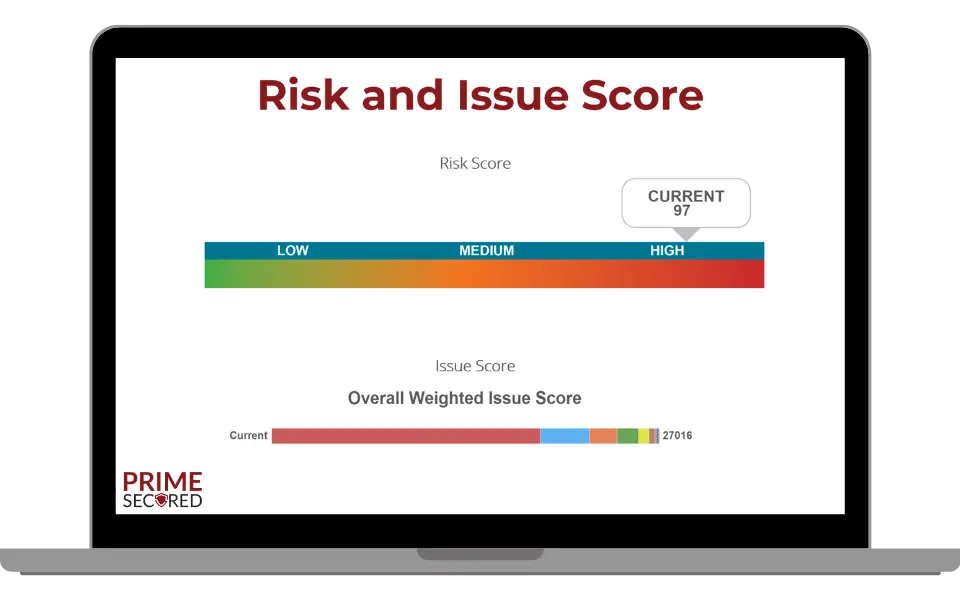
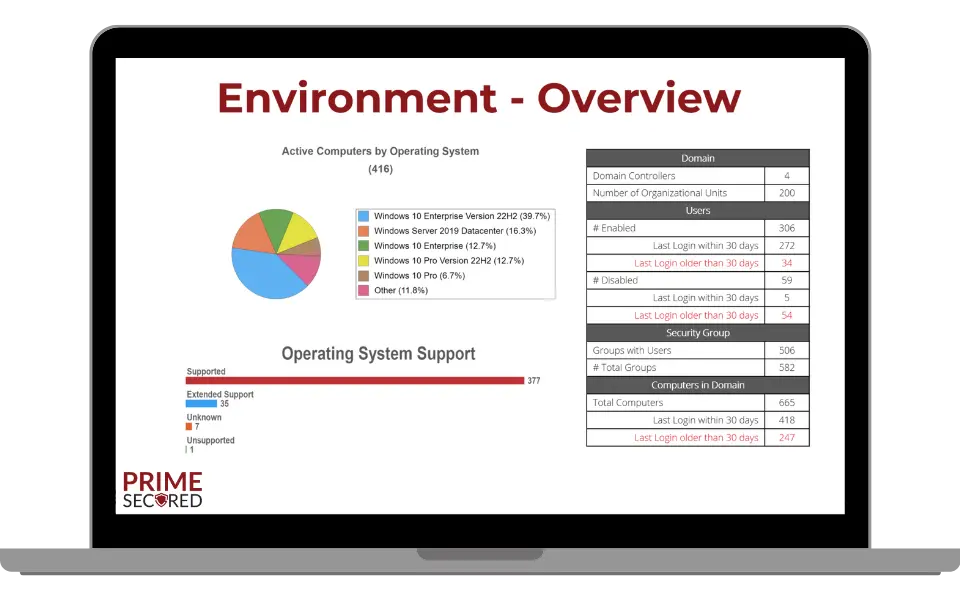
The information you'll recieve in a report format:
- Network Environment Overview
- Asset Summary
- Risk & Issue Score
- Review of Each Issue
- Recommendations
The Ultimate Guide to Complimentary Network Assessments by Prime Secured
In today’s hyper-connected business environment, maintaining a secure, high-performing network is no longer optional—it’s a necessity. Prime Secured offers a complimentary network assessment to help organizations identify network problems, optimize performance, and strengthen security posture. This in-depth guide explores everything you need to know about network security assessments, why they matter, and how they can transform your IT environment.What Is a Network Assessment?
A network assessment is a comprehensive evaluation of an organization’s network infrastructure, including network devices, traffic flow, security controls, and key network metrics. It provides a deep understanding of your IT environment, uncovering network vulnerabilities, inefficiencies, and opportunities for improvement.Why Perform a Network Assessment?
Organizations conduct network security risk assessments to:- Identify network problems affecting network speed, uptime, and reliability
- Detect security risks such as weak passwords, outdated software, or misconfigured firewall rules
- Optimize performance by analyzing bandwidth usage, memory usage, and traffic patterns
- Ensure compliance with regulatory compliance requirements
- Gain insights into how many users rely on the network and their usage patterns
- Support strategic business decisions with historical performance data
- Security breaches due to unidentified network vulnerabilities
- Poor network performance leading to lost productivity
- Inadequate bandwidth causing slowdowns during peak hours
- Non-compliance with industry regulations
What Does a Network Assessment Cover?
Prime Secured’s network security assessment evaluates multiple aspects of your network health, including security, performance, and scalability.1. Network Security Risk Assessment
A vulnerability assessment is critical to identify potential vulnerabilities before cybercriminals exploit them. Our assessment includes:- Reviewing access control lists (ACLs) and firewall rules
- Checking for weak passwords and inadequate security settings
- Scanning for outdated software and missing patches
- Detecting internal weaknesses that could lead to cyber attacks
- Optional penetration testing to simulate real-world threats
2. Network Performance & Health Check
A slow or unreliable network disrupts business operations. Our assessment analyzes:- Key network metrics (latency, jitter, packet loss)
- Network uptime and historical performance data
- Underused or overused resources (servers, switches, routers)
- Wireless networks for dead zones or interference
- Device configurations impacting efficiency
3. Network Topology & Device Inventory Mapping
Understanding your network topology is essential for troubleshooting and scaling. Our network assessment tool helps:- Automatically discover all network components (routers, switches, servers)
- Build a device inventory for better asset management
- Identify integration points that may cause bottlenecks
- Detect outdated firmware or unsupported hardware
4. Traffic & Bandwidth Analysis
Unmonitored network traffic can lead to:- Inadequate bandwidth during critical operations
- Downloading large files slowing down essential tasks
- Unauthorized data exfiltration
- Traffic flow to detect anomalies
- Usage patterns to optimize network resources
- Bandwidth allocation to prevent congestion
5. Compliance & Reporting
Many industries have strict regulatory compliance requirements. Our network assessment report helps:- Verify adherence to security measures (HIPAA, GDPR, PCI DSS)
- Generate reports for audits and informed decisions
- Document security posture for stakeholders
How Does a Network Assessment Work?
Step 1: Discovery Phase
Using automated tools, we scan your existing network to gather data on:- Network devices (routers, switches, firewalls)
- Operating system versions and patches
- Device configurations and security settings
Step 2: Analysis Phase
Our experts review:- Network vulnerabilities and security risks
- Historical performance data to detect trends
- Memory usage, CPU load, and traffic flow inefficiencies
Step 3: Reporting Phase
You receive a network assessment report detailing:- Identified network problems
- Security gaps and remediation steps
- Recommendations to optimize performance
Step 4: Action Plan
We help implement fixes, such as:- Upgrading outdated software
- Adjusting firewall rules and access control lists
- Enabling continuous monitoring for real-time alerts
Key Benefits of a Network Assessment
1. Enhanced Security Posture
- Prevents cyber attacks by identifying vulnerabilities
- Strengthens security controls and access management
2. Improved Network Performance
- Resolves inadequate bandwidth and network speed issues
- Eliminates bottlenecks in traffic flow
3. Cost Savings & Efficiency
- Avoids unnecessary hardware upgrades by right-sizing network resources
- Reduces downtime with proactive network monitoring
4. Regulatory Compliance
- Ensures adherence to regulatory compliance requirements
- Provides documentation for audits
5. Scalability & Future Growth
- Prepares network infrastructure for expansion
- Supports strategic business decisions with data-driven insights
Who Needs a Network Assessment?
- Businesses experiencing slow network speed or frequent outages
- Companies concerned about cyber threats and data breaches
- Organizations planning IT infrastructure upgrades
- IT departments needing continuous monitoring
Get Your Complimentary Network Assessment Today!
Prime Secured’s complimentary network assessment provides the insights needed to secure and optimize your business operations. Contact us today to schedule your free assessment and take control of your network health! By leveraging network assessment tools, historical data, and expert analysis, we help businesses optimize performance, strengthen security, and make informed decisions for future growth. Don’t leave your network security to chance—get assessed today! Would you like any refinements or additional sections?Understanding What’s on Your Network- Why is it so Important?
Do you know the current state of your IT environment? Maybe you were the one to choose your networking hardware and platforms, or inherited an undocumented setup, or rely on a service provider who hasn’t shared much about your network’s status. If either of these scenarios ring true, this topic is for you. We’re going to cover what a network assessment includes, how it’s conducted, the information you can gain, and how to request one.
There are numerous reasons. You may possess hardware that is outdated and no longer supported, posing a security threat and affecting user experience. Third-party patches might require updates to close potential backdoors for hackers. It’s possible to have accounts of former employees that are still active and unknown to you. Some employees may not adhere to password policies, making them vulnerable to hacking attempts. Ultimately, it’s vital to be aware of your cybersecurity posture to protect your business effectively.
What Information is Collected in a Network Assessment?
A network assessment evaluates:
Overall Network Architecture: This includes the design and layout of your network, focusing on scalability, reliability, performance, and security.
Hardware & Software Inventory: A detailed list of all your network’s physical and software assets, aiding in asset management, maintenance planning, and ensuring software compliance.
Cybersecurity Posture: An examination of your network’s security measures, including password policies, active and deactivated users, to gauge your cybersecurity health.
Performance Analysis: Insights into data transmission speed, application performance, and bandwidth utilization, which affect user satisfaction and productivity.
Compliance with Standards and Policies: Ensures your infrastructure adheres to industry security standards and internal policies, safeguarding your operations and legal standing.
An expert compiles this data into a comprehensive report, highlighting your overall risk and issues. For a glimpse at a detailed network assessment, download Prime Secured’s sample of a completed network assessment.
So, What Next?
With this data, managed service providers, like Prime Secured, can craft a custom plan for your business. This may include a technology roadmap for the next five years, outlining when to replace hardware or update software, helping you plan your technology budget and avoid unexpected failures.
Thinking About a Network Assessment?
Wondering about the process and time commitment? Our senior technical experts conduct assessments by:
- Planning & Scoping: Setting goals and timelines.
- Data Gathering: Collecting detailed information on your network.
- Vulnerability Scanning: Identifying security vulnerabilities.
- Performance Analysis: Assessing network efficiency and identifying bottlenecks.
- Compliance Check: Ensuring adherence to standards and policies.
- Reporting & Recommendations: Offering an overview of your network’s status & improvements.
We hope this information has been useful to you. When we initially meet with clients overwhelmed by managing their IT and cybersecurity, they’re dealing with a fragmented setup — one vendor for firewalls, another for helpdesk needs, with various components pieced together haphazardly. If this scenario resonates with you, we recommend starting with a network assessment as your first step.
Get started by booking your complimentary network assessment.
In addition to our sample network assessment report, we want to provide you with these additional resources:
- In 2023 we conducted over 30 network assessments on organizations with an IT provider. We found a lot of gaps where organizations thought they were covered. You can access those results here.
- Stressed about switching providers? Download our guide on how we make switching your IT partner easy.
- Looking to understand in general how an IT provider can save you time and money. Read, How IT Providers Simplify Technology Budgeting for Small Businesses
FAQ About Network Assessment Reports
What is a network assessment and why is it important?
A network assessment is a detailed evaluation of your entire network’s architecture, performance, and security posture. It examines network devices, hardware and software components, network traffic patterns, and access control policies to identify vulnerabilities, bottlenecks, and compliance issues. This process is a critical part of maintaining network health, improving network security, and reducing potential security risks.How does a network assessment help improve network performance?
By using network assessment tools and software, experts can detect performance bottlenecks, bandwidth utilization issues, and network congestion. The assessment report includes performance metrics, network’s speed data, and key metrics to pinpoint problems like slow video conferencing or latency. Addressing these performance issues ensures your IT infrastructure supports business operations efficiently.What information is included in a network assessment report?
A comprehensive report contains a network inventory of hardware and software components, operating systems, identified networks, compliance reporting results, and vulnerability management findings. It also covers the network’s architecture, traffic analysis, capacity planning data, and remediation efforts. Many reports include an executive summary and a SWOT analysis for decision-makers.How often should I conduct a network assessment?
It’s recommended to conduct assessments at least once a year, or after major IT changes like deploying new network infrastructure or adding critical network devices. Regular assessments help monitor network’s performance, track compliance with network policies, and identify vulnerabilities before they lead to downtime or security incidents.What can I expect from the network assessment process?
The assessment process typically includes planning and scoping, gathering SNMP credentials, inventory reporting, vulnerability scanning, performance analysis, compliance checks, and generating a comprehensive template report. The goal is to highlight identified issues, security risks, and performance bottlenecks, then provide remediation recommendations to improve the network’s health and reliability.Turn Your Assessment Into Action: What Happens After the Network Assessment Report
A solid network assessment shouldn’t end with a PDF. It should translate your current state into a roadmap the company can use to make informed decisions. After reviewing your network infrastructure, we align the findings with your business needs and business goals, then build a plan to address gaps and optimize day-to-day operations. Expect a detailed report that prioritizes remediation by impact and effort, so your team can implement improvements without disrupting users or revenue. The outcome is a more reliable infrastructure with better performance, stronger security measures, and clearer ownership of processes across IT and the business.What’s inside the follow-up analysis
Our analysis includes configuration mapping of network components, network architecture, and connected systems—from firewalls and switches to servers, software, and cloud services. We perform an audit of controls and policies to confirm they’re enforced, evaluate the severity of open vulnerabilities, and identify vulnerabilities that may leave data and applications vulnerable to cyber threats. You’ll see capacity baselines, latency snapshots, and utilization charts that point directly to improvement opportunities for throughput and productivity.Why a Free Network Assessment Today Pays Off Tomorrow
Many organizations rely on legacy gear or partial documentation, which makes it hard to gain visibility or decide where to invest. A free network assessment removes the guesswork. With an in depth analysis of configurations, change history, and access models, you’ll uncover weaknesses that threaten security and uptime, as well as quick wins that benefit both cost and efficiency. The free assessment also clarifies which fixes are critical now and which can be sequenced over the future quarters to support growth.What you can expect from the free network assessment
You’ll receive a concise network assessment report with a complete inventory, prioritized risks, and an action plan that ties technical work back to business outcomes. We highlight which controls will best protect customer data, how to secure remote access, and where to tune QoS to boost application performance. If you choose, we’ll create a phased schedule that shows owners, timelines, and acceptance tests—so the next steps are crystal clear.From Report to Execution: Secure, Optimize, and Scale
The first phase concentrates on hardening: patching software, tightening identity, and validating backups so employees and clients stay protected. Next, we tune the environment—traffic shaping, DNS hygiene, and segmentation—to raise health scores and throughput. Finally, we plan modernization: lifecycle replacement, cloud connectivity, and automation that reduce toil and speed recovery. Each step includes acceptance criteria, rollback checkpoints, and post-change validation to ensure your site remains stable.How we handle risk without slowing the business
We assess exposure against your tolerance and compliance mandates, then stage fixes to minimize impact on operations. Controls are enforced using least-privilege access, MFA, and hardened baselines. We pair technical tasks with user guidance so employees understand changes and users experience fewer incidents—not more.Ready to See Your Network Clearly?
If you’ve never had a structured review—or it’s been a while—request a free network assessment today. The process is straightforward: complete the short form, we schedule the kickoff, and our engineers begin the assessment. We’ll lead you through discovery, depth diagnostics, and a practical remediation plan tailored to your company. You’ll gain the insights you need to decide what to tackle first, what to defer, and how to budget with confidence.What we’ll deliver
- An executive summary that connects technical risk to business impact
- A prioritized remediation track for critical items and medium-term upgrades
- Architecture mapping and configuration notes for faster troubleshooting
- Compliance cross-checks and policy gaps with recommendations to address them
- Capacity and performance metrics you can trend over time