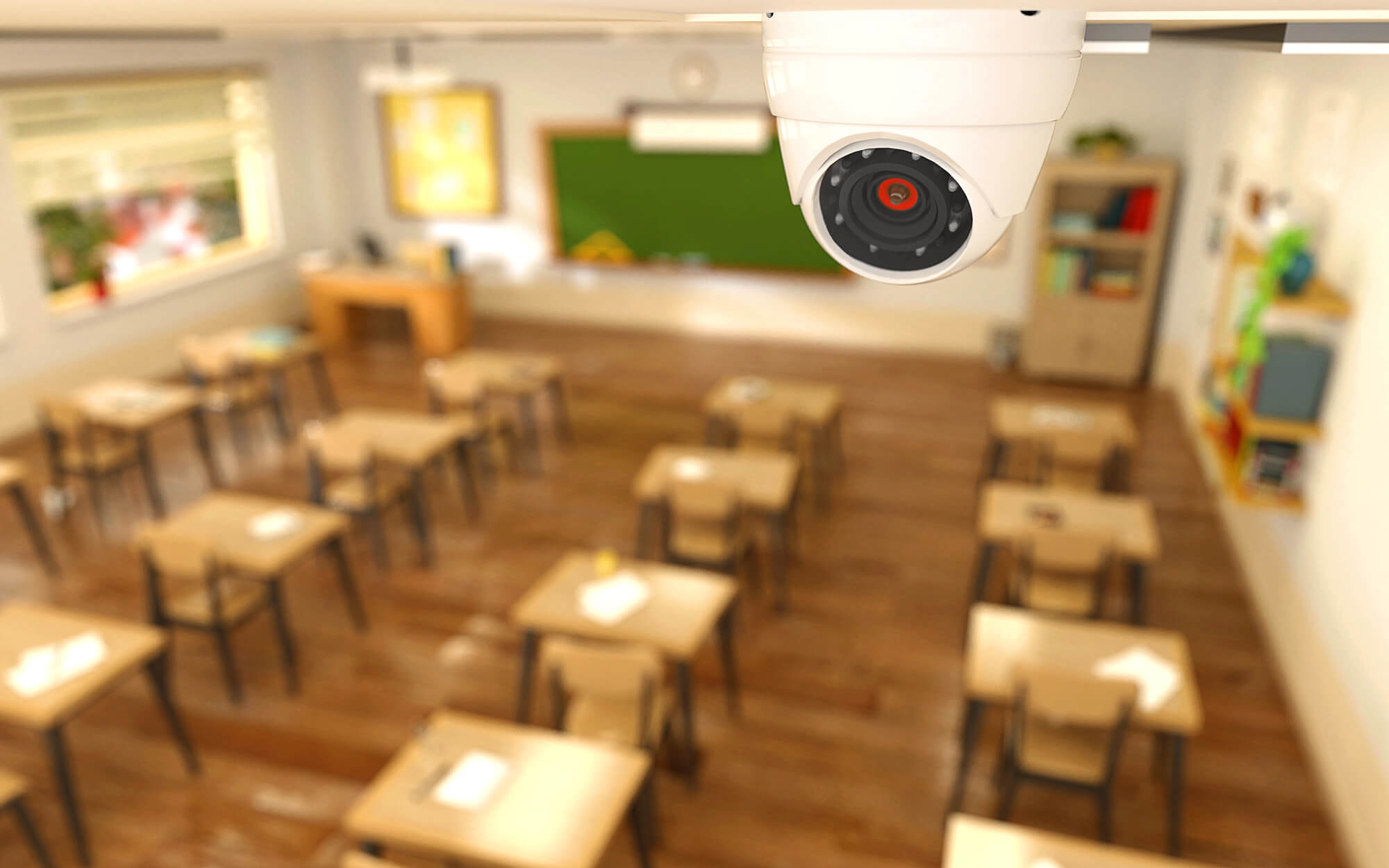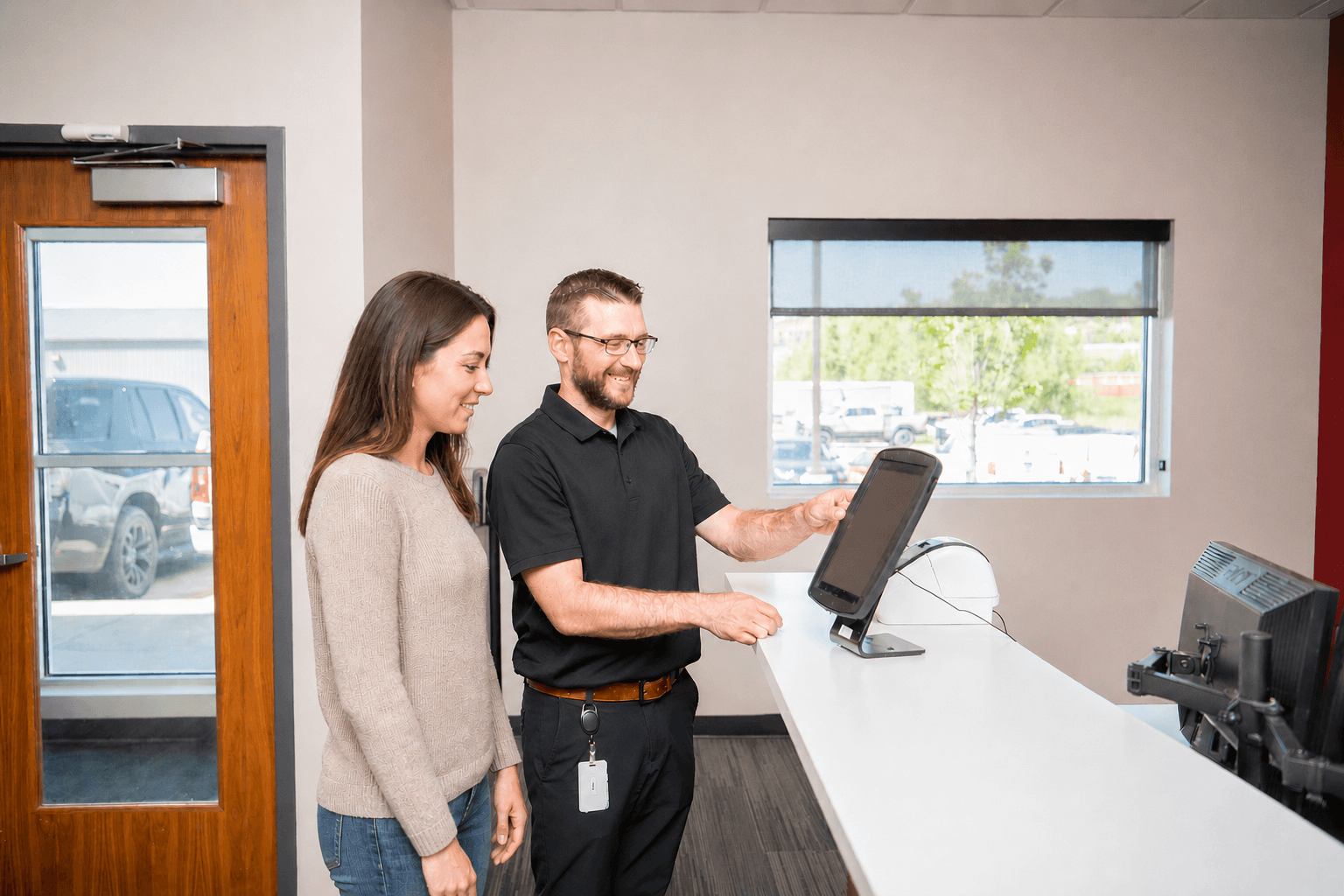
Walk your sites on a normal weekday, and much of the risk doesn’t come through the lobby.
It rolls through loading docks, employee parking lots, side gates, and shared garages. Vehicles come and go with little structured record of when they arrived or how often they return. After an incident, you may have footage of a car but no quick way to connect it to a plate or pattern.
For commercial property leaders and their security, operations, and IT teams, that gap matters. Parking lots and driveways often reveal the difference between what leadership assumes is visible and what your legacy systems actually capture. If you can’t answer, “Which vehicles were on site, and have they been here before?” you’re operating with avoidable blind spots.
Commercial license plate recognition cameras (LPR), also known as automatic license plate recognition (ALPR), help close that gap without adding to your team’s workload. This guide covers where LPR delivers value, what drives costs, and how to build a defensible program. It offers planning guidance, not legal advice; involve your legal and compliance teams in surveillance and data decisions.
What Can License Plate Recognition Cameras Actually Do for a Commercial Property?
At a commercial property, Automatic License Plate Recognition (ALPR), or Automatic Number Plate Recognition (ANPR) cameras, turn vehicle movement through monitored entrances and exits into searchable records, including plate details, time of entry and exit, and location, often linked to video footage. These cameras use Optical Character Recognition (OCR) technology to capture plate images and convert them into text, integrating with existing systems to apply set rules for monitoring and management.
The records generated by ANPR systems can enhance gate access control, manage parking sessions, provide alerts, aid in security investigations, and support comprehensive report creation. Rather than searching hours of footage manually, security teams can quickly locate recorded visits associated with a license plate, providing relevant video and data with ease.
This distinction enhances traditional security measures. While general video surveillance helps understand activities in an area, LPR technology simplifies searching, comparing, and acting upon vehicle activity. However, it must be noted that while LPR cameras efficiently identify plates, they don’t identify the driver, and the highest-resolution pictures are reserved for the plate numbers, meaning further evidence may be required to establish individual responsibility during investigations.
A Shared Definition Your Business Can Support
Different stakeholders within a business often have varied expectations when discussing LPR systems.
- Operations may look for streamlined gate access and fewer parking disputes.
- Security teams prioritize effective responses to incidents and suspicious activity.
- Finance is concerned with the return on investment (ROI), including considerations like the three- to five-year total cost of ownership.
- IT and legal departments focus on seamless integration, data security, and compliance with privacy laws.
For those managing multi-site commercial portfolios, discussions expand to include factors such as net operating income, mitigation of parking revenue loss, tenant satisfaction, and standardizing practices across various properties to optimize assets.
Before selecting vendors or deploying LPR camera technology across properties, it’s essential to forge a shared definition of success. For example: “In our real estate properties or perimeter boundaries, LPR should reliably recognize plates at key entry and exit points, streamline authorized access, improve crime and vandalism investigations, and reduce parking friction while adhering to clearly defined privacy policies.”
Having a shared understanding allows your team to make informed design, spending, and policy decisions, ultimately resulting in optimized operational and security benefits for your commercial sites.
How Automatic License Plate Recognition (ALPR) Fits into Your Cameras, Access Control, and Parking Systems
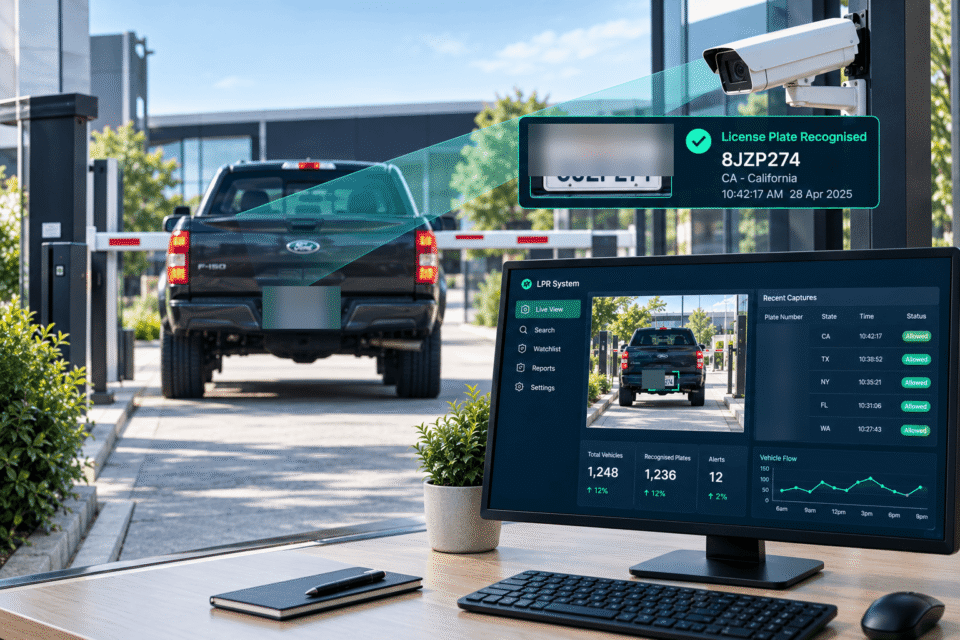
Automatic License Plate Recognition (ALPR) is seldom a standalone project. Instead, it often extends your existing systems or risks becoming an underutilized silo. In most commercial property deployments, ALPR follows a structured four-stage process:
- Capture: License plate recognition cameras are strategically positioned to record plates clearly at entry and exit points, as well as other important locations within perimeter boundaries.
- Recognize: Optical Character Recognition (OCR) software identifies the plate characters, allowing the creation of searchable records that can be used for monitoring and security logs.
- Decide: Rules are established to check permits, access permissions, time windows, and watchlists, ensuring efficient site security and access management.
- Act: Integrated systems manage actions such as opening gates, initiating parking sessions, sending alerts, or logging potential trespassing events and suspicious activities for later investigations.
Integration determines the success or failure of many ALPR projects. Effective LPR systems must communicate with access control, parking payment platforms, video management software, and visitor management tools. If these interconnected systems maintain separate records, it complicates investigations, reporting, and security measures.
Choosing What to Keep and What to Upgrade
An initial inventory often reveals existing assets: possibly capable cameras and access control systems, but lacking recognition software; or a parking platform with limited integration.
Existing cameras may be suitable for general surveillance, but it’s crucial to ensure they can capture plates reliably, even at vehicle speed or in challenging lighting conditions, like those addressed by lighting LPR cameras.
Decisions about where license plate events are stored and who manages them are important. Access control systems might keep records of authorized plates, parking systems could manage permits and payments, and security platforms might handle investigation details. Early decision-making on system ownership prevents later confusion and data duplication.
This is where a comprehensive understanding of physical security, access control, LPR technology, and current security costs, including opex and capex, is valuable. By avoiding the perception of LPR as merely another camera purchase, a strategic approach is taken to integrate ALPR technology into existing systems, potentially leading to annual labor savings and improvements in ROI and IRR.
Security-First Use Cases: Turning Driveways into Intelligent Checkpoints
From a security perspective, Automatic License Plate Recognition (ALPR) shifts the focus from tedious vehicle activity reconstruction after an incident to proactive pattern recognition. This technology enables security teams to ask, “Has this plate been here before, and under what conditions?” rather than starting every investigation with “Do we have video from that day?”
Common commercial security applications include:
- Watchlists and Access Restrictions: Flag license plates associated with documented incidents or restricted access areas, subject to verification by the security teams.
- After-hours Activity: Use recognition and monitoring systems to alert when vehicles appear at unusual times, particularly in parking lots and properties with restricted entry.
- Pattern Detection: Identify repeat visits across monitored entrances, especially in multi-site commercial portfolios, that warrant further review.
- Faster Investigations: Quickly retrieve license plate events and linked video using LPR systems without the need to manually search through hours of surveillance footage.
Consider a vehicle repeatedly appearing near loading docks after business hours. Traditional security measures using conventional cameras may record each visit, but recognizing the pattern can require extensive manual review. LPR technology can streamline this process, making those recorded visits easier to connect and understand.
The real benefits of ALPR systems depend on what your team does with the information gathered. A plate match is a signal to assess and investigate further, not direct proof of wrongdoing. The insights provided by optical character recognition (OCR) within license plate recognition cameras enhance security posture by allowing teams to make informed decisions.
Workflows Your Team Can Actually Run
Good alerts with bad workflows create noise rather than value. For each use case, establish a short, realistic playbook:
- Verification: Determine who checks plate matches and supporting video before any action is taken.
- Escalation: Set guidelines for events and activities a guard should respond to versus when monitoring is sufficient.
- Documentation: Decide which events require comprehensive incident records and security logs for owners.
- Watchlist Governance: Establish protocols on who approves watchlist entries, reviews them, and removes outdated information.
- Information Sharing: Set clear procedures on who can release records to external parties and under what approved conditions.
Clear ownership and governance mechanisms prevent outdated entries from remaining active and ensure human judgment is a key component in decisions impacting access or reputation.
Start with a small number of critical events to monitor and adjust alert rules based on operational needs after a pilot phase. The objective is not merely to classify every unread or unregistered plate as a trespassing event or just increase notifications, but to provide better information that your team can use consistently to enhance security measures.
How Automatic License Plate Recognition Makes Parking Faster and Fairer
Operational leaders rarely ask for more technology; they seek solutions that reduce headaches like shorter lines, fewer disputes, and less time spent managing permits and spreadsheets. Parking lots and properties often serve as the first and last touchpoints for tenants, employees, and visitors, and any friction encountered can significantly shape their impression of the entire property.
LPR cameras help by treating registered license plates as credentials rather than simply images.
Depending on the system, this can allow commercial property owners to:
- Let authorized vehicles enter and exit with fewer stops, enhancing security and time efficiency.
- Replace physical permits with digital plate-based permissions, streamlining entry and exit procedures.
- Support payment and validation by plate number, simplifying the transactional aspect of parking.
- Resolve parking disputes using recorded entry and exit events, backed by reliable security logs.
- Reduce routine manual checks while staff handles exceptions, minimizing labor, operational, and administrative costs.
At a multi-tenant office, monthly parking permit holders might use LPR-enabled lanes while visitors register their plates through a kiosk. At a healthcare campus, enrolled staff vehicles can move through during shift changes while visitor parking sessions are recorded at monitored entrances.
These improvements are not automatic. They depend on reliable plate reads, appropriate integrations, and workflows that account for everyday exceptions.
Plan for the Messy Realities
Rental cars, replacement vehicles, plate changes, motorcycles, and shared household vehicles can challenge an otherwise straightforward LPR system. Properties can reduce support requests by pairing LPR cameras with simple self-service options: tenant portals for plate updates, visitor registration tools, and administrative controls for small fleets.
A backup plan is essential when a plate cannot be read or a registered vehicle is missing from the system. A driver should not become stranded at a gate because the technology encountered an exception, or it was an after-hours visit.
If parking is already a chronic problem, piloting with one or two entrances can provide a practical test. Measure queue times, complaints, disputes, and staff workload before deciding whether broader deployment makes sense.
Nonetheless, by using ALPR technology in parking management, commercial properties can significantly enhance their operational efficiency and user experience, all while optimizing their ROI and reducing associated admin costs.
What Does Commercial License Plate Recognition Cost?
Most executives are less concerned with the price of a single camera than with what an LPR program will cost over three to five years.
Total administrative costs for commercial license plate recognition vary with the number of monitored lanes, camera requirements, existing infrastructure, software licensing, integration complexity, and data retention needs. A hardware price alone rarely reflects the cost of a working system.
A realistic budget includes:
- Hardware: Cameras, sensors, mounts, power, lighting where needed, and network connectivity.
- Software: Recognition capabilities, management platforms, and applicable licenses or subscriptions.
- Implementation: Site design, installation, configuration, integration, and training.
- Ongoing support: Maintenance, software updates, system tuning, storage, and recurring fees.
Network upgrades, construction work, and changes to existing parking equipment can add expense. Some costs belong in a capital budget; others become recurring operating expenses.
Ask vendors to separate upfront implementation costs from annual charges and identify assumptions about existing infrastructure. That makes proposals easier to compare and helps finance, acquisition, or investment managers understand the true commitment before signing any contracts.
Comparing LPR with More Cameras or Guards
The useful question is not simply “What does LPR cost?” but “How does it compare with our alternatives over the next few years?”
| Approach | Cost Considerations | Operational Impact |
| Legacy system | Existing equipment, guard labor, and ongoing manual work | Familiar processes, but a limited searchable vehicle history |
| More cameras or guard coverage | Additional equipment or staffing expenses | Potentially better coverage, but much of the review remains manual |
| LPR with workflow changes | Higher integration requirements and possible recurring software fees | Searchable vehicle records, automated access options, and fewer routine checks |
Build a three- to five-year comparison using your own figures: guard hours, dispute volume, investigation time, parking revenue, maintenance, and expected software fees.
Be careful about assuming every automated task becomes a direct labor saving. In some properties, the greater benefit is allowing existing staff to focus on higher-value work or reducing delays and disputes.
A dependable project estimate requires site-specific information. Without confirmed equipment, lane conditions, integrations, and licensing, a generic dollar figure can be more misleading than useful.
Prime Secured takes a broader view of your existing security and IT infrastructure to help determine where LPR makes sense, what can be retained, and what the investment will require. A properly scoped proposal should account for both the initial investment and ongoing costs.
Which Deployment Model and Accuracy Targets Make Sense?
Even a strong business case can unravel if you choose an architecture that your team cannot support or rely on performance claims that only hold under ideal conditions.
Most commercial LPR deployments use one of three approaches:
- On-premises: Recognition and storage operate on local infrastructure. You retain more direct control but also responsibility for maintenance, updates, and availability.
- Cloud-managed: A cloud platform supports management and data services. Centralized administration can be easier, but connectivity, data handling, and recurring fees need attention.
- Hybrid: Local processing supports lane operations while selected events synchronize with a central platform. This can balance resilience and oversight but requires clear ownership of synchronization and monitoring.
Match the approach to your IT capacity, uptime requirements, existing systems, and privacy obligations.
Accuracy Is a Design Decision
No LPR system reads every plate correctly under all real-world conditions.
Performance depends on camera angle, distance, vehicle speed, lighting, weather, plate condition, and regional plate variations. The same system may perform differently at two entrances on the same property.
Set measurable acceptance criteria for each lane and test under realistic conditions. Ask vendors to distinguish between successfully capturing a plate and correctly reading its characters.
Also, decide what happens when a read ail, or confidence is low. For consequential actions such as towing, denying access, or escalating a security incident, a single uncertain match should not replace appropriate human verification.
The goal is not a perfect laboratory demonstration. It is a dependable performance that your team can maintain.
Policy and Privacy You Can Explain to Tenants, Staff, and Regulators
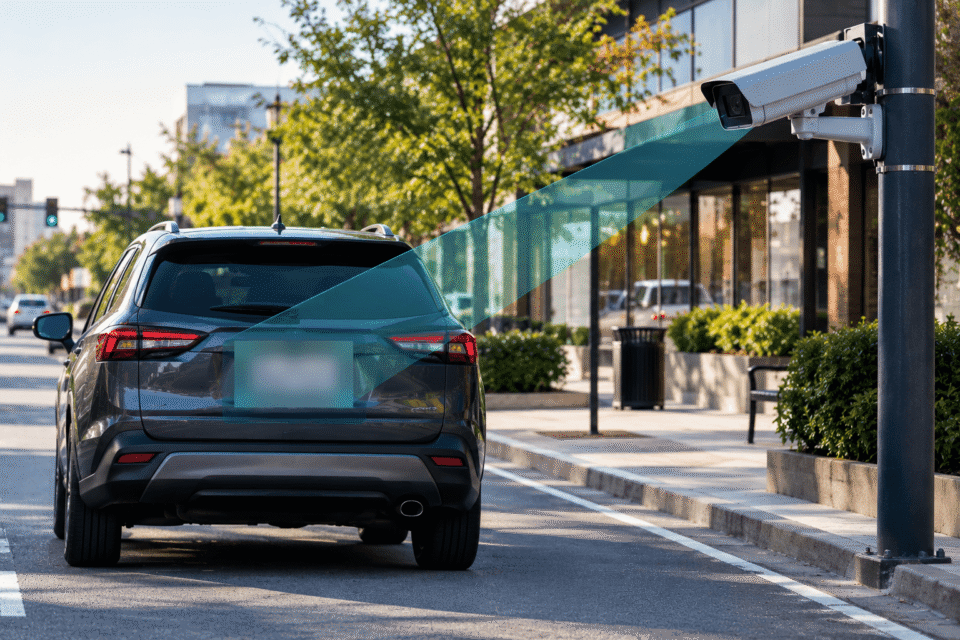
Because plate records can be linked to individuals, they deserve deliberate governance. Strong programs establish privacy and security rules before cameras go live, not after a complaint or an information request.
The test is simple: could you explain the program to a tenant, employee, or regulator without becoming defensive?
Before deployment, bring security, IT, legal, HR, and operations together to decide:
- Why is plate data collected, and what uses are permitted?
- How long are different records retained?
- Who can search, export, or share plate histories?
- How drivers are informed about collection and use.
- How requests from law enforcement or other parties are handled.
- How records are secured, audited, and deleted when no longer needed.
Separate routine operational records from incident evidence that must be preserved. Limit unnecessary searches, review access permissions, and make sure signage matches actual practices.
Legal obligations vary by jurisdiction, property type, and intended use. Your legal counsel should confirm applicable requirements rather than assuming one policy will work across every property.
Clear rules make LPR easier to defend with leadership, tenants, auditors, and regulators. They also help staff understand what the system is for and what it is not for.
Where Should You Start with LPR Across Your Portfolio?
Most portfolios do not need LPR at every lane on day one. A simple scoring model can help identify where a pilot offers the clearest value.
Evaluate candidate entrances against four factors:
- Risk: Would better vehicle records materially support security or investigations?
- Throughput: Are traffic volume and gate delays creating operational problems?
- Current pain: How much staff time goes into disputes, permits, and manual reviews?
- Deployment difficulty: What power, networking, construction, or integration work is required?
Choose a location where the problem is meaningful and the technical path is realistic. A difficult site may be important, but it is not always the best place to establish your first performance baseline.
Define success before installation. Useful measures include plate-read accuracy, uptime, investigation time, guard workload, parking complaints, and tenant feedback.
Compare those results with the existing process. Then decide whether to expand, adjust the design, or stop.
That is a more defensible approach than installing LPR cameras everywhere and hoping the operational benefits follow.
That measured approach reflects how Prime Secured helps organizations think about security investments: understand the exposure, evaluate what is already in place, and make changes where they will deliver meaningful value. With LPR, the objective is not simply to recognize more license plates. It is to make better decisions about the vehicles moving through your property.
Make Commercial License Plate Recognition Work for Your Property with Prime Secured
Commercial license plate recognition is most valuable when it addresses a real problem: limited visibility at entrances, slow investigations, parking friction, or disconnected security systems. The right solution starts with understanding your property’s risks, existing infrastructure, and operational priorities.
Prime Secured brings physical security, access control, and IT expertise together to look beyond the cameras themselves. That integrated perspective helps identify where LPR makes sense, how it can work with systems you already own, and where a simpler upgrade may deliver better value.
Whether you’re considering one entrance or planning across multiple properties, the goal is a practical approach that balances security, cost, and day-to-day operations without adding unnecessary complexity.
If you’re ready to evaluate your existing IT infrastructure, Book a free network assessment with Prime Secured and take the first step toward a more connected, manageable security environment.